

The biggest knock on Dwayne “The Rock” Johnson’s career is that every single one of his roles boils down to the same thing. He doesn’t truly play characters; he just plays variations of Dwayne “The Rock” Johnson.
By now, you’ve probably seen that meme circulating online: a collage of Johnson wearing the exact same shirt across four different movies (Rampage, San Andreas, Central Intelligence, and Jumanji), underscoring how little variety he brings to the table as an actor. It’s a fair jab, and one that’s dogged him from his WWE glory days to his Hollywood dominance.
For the last six years, Johnson has been teasing a passion project about MMA trailblazer Mark Kerr. He first hyped it to audiences at UFC 244 in 2019, promising to star in a biopic chronicling the life of the hulking wrestler-turned-fighter. Fast-forward to 2025, and the film titled The Smashing Machine, directed and written by Benny Safdie has finally hit theaters via A24.
Surprisingly, Johnson has earned Oscar buzz for his unrecognizable turn: balding pate, gaunt cheeks, and a haunted vulnerability that ditches the charm for raw torment. Early screenings at the Venice Film Festival drew a 15-minute standing ovation, with critics hailing it as his most transformative performance yet. But here’s the rub: There’s a world of difference between a killer makeup job and the inner strength of a seasoned actor.

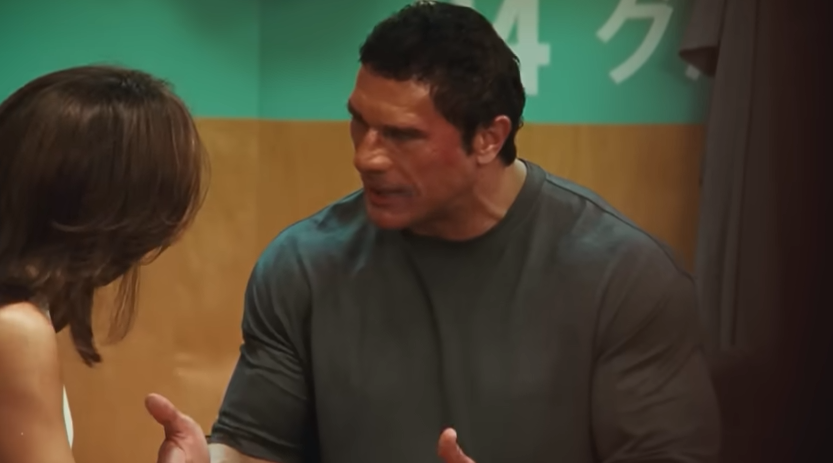
Is The Rock finally ready to leap from action-hero schtick to serious dramatic heavyweight? In the raw, unforgiving arenas of late-1990s mixed martial arts, Mark Kerr (Johnson) emerges as a colossus of the cage. A towering former collegiate wrestler with unyielding power and technique, Kerr storms into the nascent PRIDE FC landscape, earning the moniker “The Smashing Machine” for his devastating ground-and-pound assaults that pulverize opponents into submission.
The film, loosely based on the 2002 HBO documentary of the same name, traces Kerr’s meteoric ascent from amateur circuits to the pinnacle of professional fighting. His dominance in brutal tournaments like PRIDE’s Grand Prix in Japan captivates a global audience craving the sport’s unfiltered authenticity, think soccer stadiums packed with 50,000 screaming fans under neon lights, a far cry from the underground vibe of early UFC.
As victories pile up, Kerr grapples with the invisible toll of his relentless pursuit of glory. The constant grind of bone-crushing training regimens, the isolation of life on the road, and the pressure to embody an invincible persona begin to erode his armor.
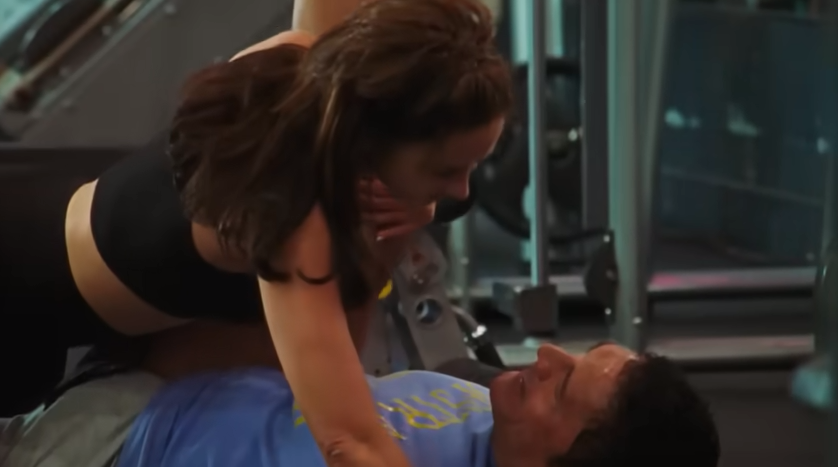
Amid the adrenaline-fueled highs, he finds fleeting solace in his marriage to Dawn Staples (Emily Blunt), a steadfast anchor who navigates the chaos of his world with quiet resolve and biting wit. Their scenes—crackling with codependent tension—offer some of the film’s emotional anchors, like when Dawn flinches as Kerr punches through a kitchen door in a painkiller-fueled rage, or their droll rehab banter over a neglected cactus.
Yet, Kerr confronts the creeping shadows of chronic pain, and the seductive lure of prescribed painkillers—meant to keep him in the fight—threatens to drag him under if he doesn’t pull it together.
Safdie’s script, shot on gritty 16mm with flashes of IMAX 70mm for the cage chaos, dives into this spiral: Kerr’s first-ever loss in 1997 triggers a breakdown, leading to rehab, relapses, and a hallucinatory haze of withdrawal that Safdie renders with handheld intimacy, evoking Taxi Driver‘s urban paranoia.
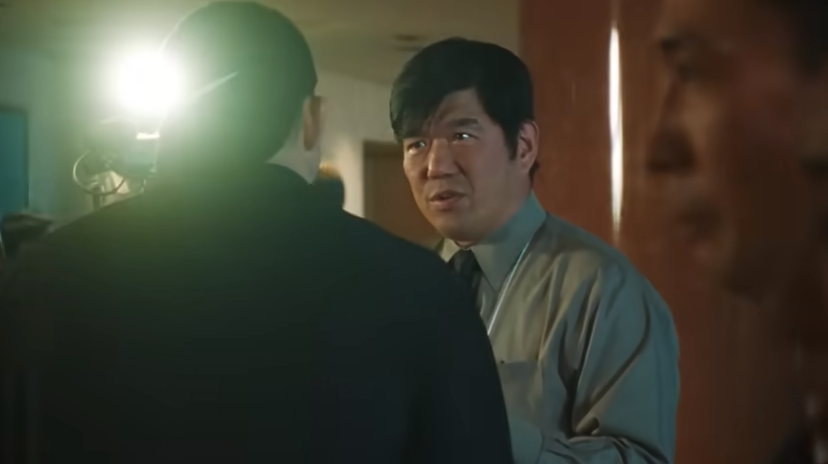
There are a few ways to view this film, especially from the MMA world’s lens on the sport’s scrappy origins. Fans will spot cameos from real fighters: Ryan Bader (a former Bellator champ) as Kerr’s best friend and rival Mark Coleman, bringing gritty authenticity to their bromantic clashes; Bas Rutten as a no-nonsense trainer; and even heavyweight Oleksandr Usyk in a blink-and-miss-it role.
Bader, lacking polished acting chops, nails the essence of early MMA—sweaty locker-room pep talks and post-fight beers that feel ripped from VHS tapes. For the uninitiated, a quick primer: PRIDE FC was the biggest mixed martial arts organization in the late ’90s and early 2000s, drawing massive crowds in Japan with its spectacle—elbow strikes to the head, stomps in the ring—before the UFC absorbed its DNA in the mid-2000s.
The Smashing Machine does solid work recreating that vibe: thunderous crowd roars, ring girls in kimonos, and Kerr’s signature bear hugs. But for those who lived PRIDE’s heyday, the scale feels diminished—no true replication of those electric Osaka Dome spectacles, more like a respectful nod than a full immersion.
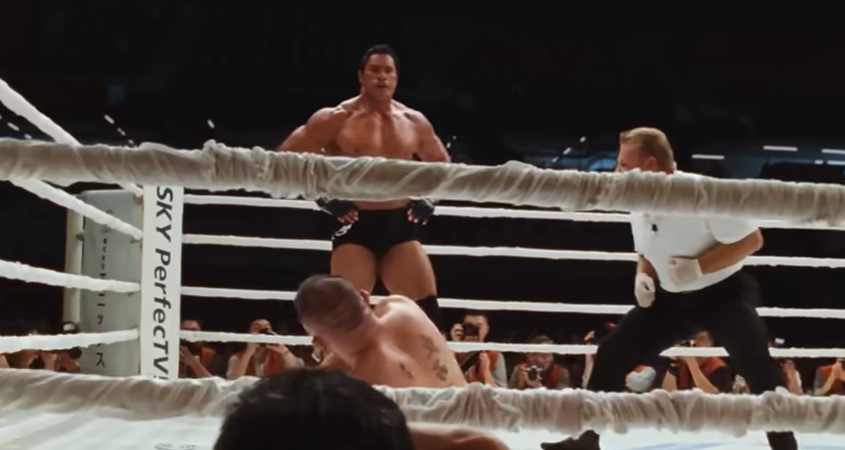
When it comes to the fighting sequences, there’s plenty to desire if you’re a hardcore MMA fan—the likely core audience. Johnson, pushing 53, is portraying a Kerr in his prime (late 20s to early 30s), and while prosthetics and stunt doubles help, his physical limitations peek through. Outside occasional thunderous body slams and a visceral recreation of Kerr’s 1999 PRIDE 8 win over Wanderlei Silva, the bouts lack kinetic punch—more montage than masterpiece, prioritizing emotional fallout over fight choreography.
Another disconnect: While Kerr’s real-life saga is undeniably compelling, the film feels adrift on which chapter to foreground. It kicks off deep in his early MMA days, pre-PRIDE fame, then rushes into his opioid struggles—pills popping like candy after a shoulder injury—without lingering on the gut-wrenching depths of addiction. One minute he’s sweating through withdrawals; the next, he’s shadowboxing for a comeback bout.
Kerr’s actual record is a rollercoaster of mini-triumphs and setbacks (two UFC titles, PRIDE double-crown, but losses to the likes of Fedor Emelianenko), yet the movie glosses over them, likely to dodge a total downer tone. Safdie favors moody silences over sentiment, which lands some dramatic haymakers but leaves the narrative meandering—like a fighter gassing out in the third round.
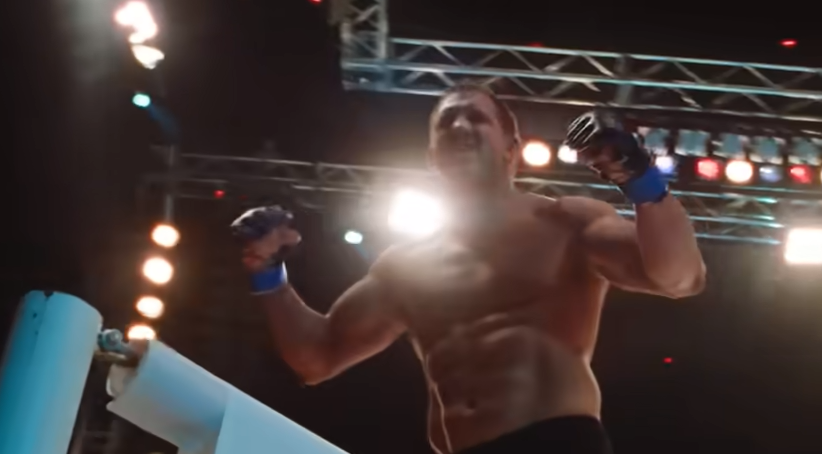
It’s great to see Johnson take a swing at something raw, shedding his invulnerable persona for Kerr’s brooding fragility. His post-loss sobs, burying that boulder-sized head in his hands, crack open a vulnerability we’ve rarely glimpsed. Early Oscar whispers from Venice make sense—he transforms, channeling Kerr’s “physical anomaly” with radical empathy. But the performance doesn’t quite match the hype; it’s absorbing, not revelatory, held back by the script’s restraint.
Blunt fares better as Dawn, but her role as Kerr’s self-absorbed, unstable partner feels unflattering and underdeveloped—more reactive than revelatory, especially since she’s playing someone two decades her junior. Still, their chemistry sizzles in the domestic trenches, elevating the film’s acting creds alongside the fighters’ cameos.
The biggest praises align with the performances, turning The Smashing Machine into a solid bro-drama for UFC diehards. Johnson and Blunt mesh in the harsh MMA ecosystem, with real athletes lending credibility to the cage-side grit. The downside? The writing.
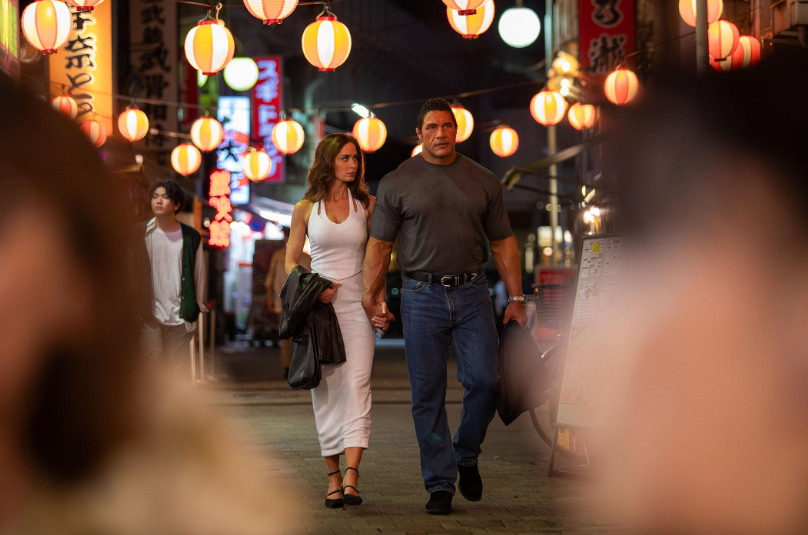
It’s not outright bad, but the disconnect stems from excising the salacious details of Kerr’s downfall—his 2000 overdose, messy divorces, or post-fight benders—to shield those involved. By sanding off those edges, we miss the full gut-punch of a man’s rise and fall; it’s a biopic that pulls punches when it should swing wild.
The Smashing Machine is a promising step for Johnson toward being taken seriously as an actor, but you’ll leave the theater feeling like there was prime rib left on the bone—a stronger narrative could’ve turned this into a knockout.
3/5
Don’t forget to Subscribe for Updates. Also, Follow Us at Society-Reviews, YouTube, Instagram, Twitter, Odysee, Rumble, and Twitch




 Society Reviews
Leave a comment